
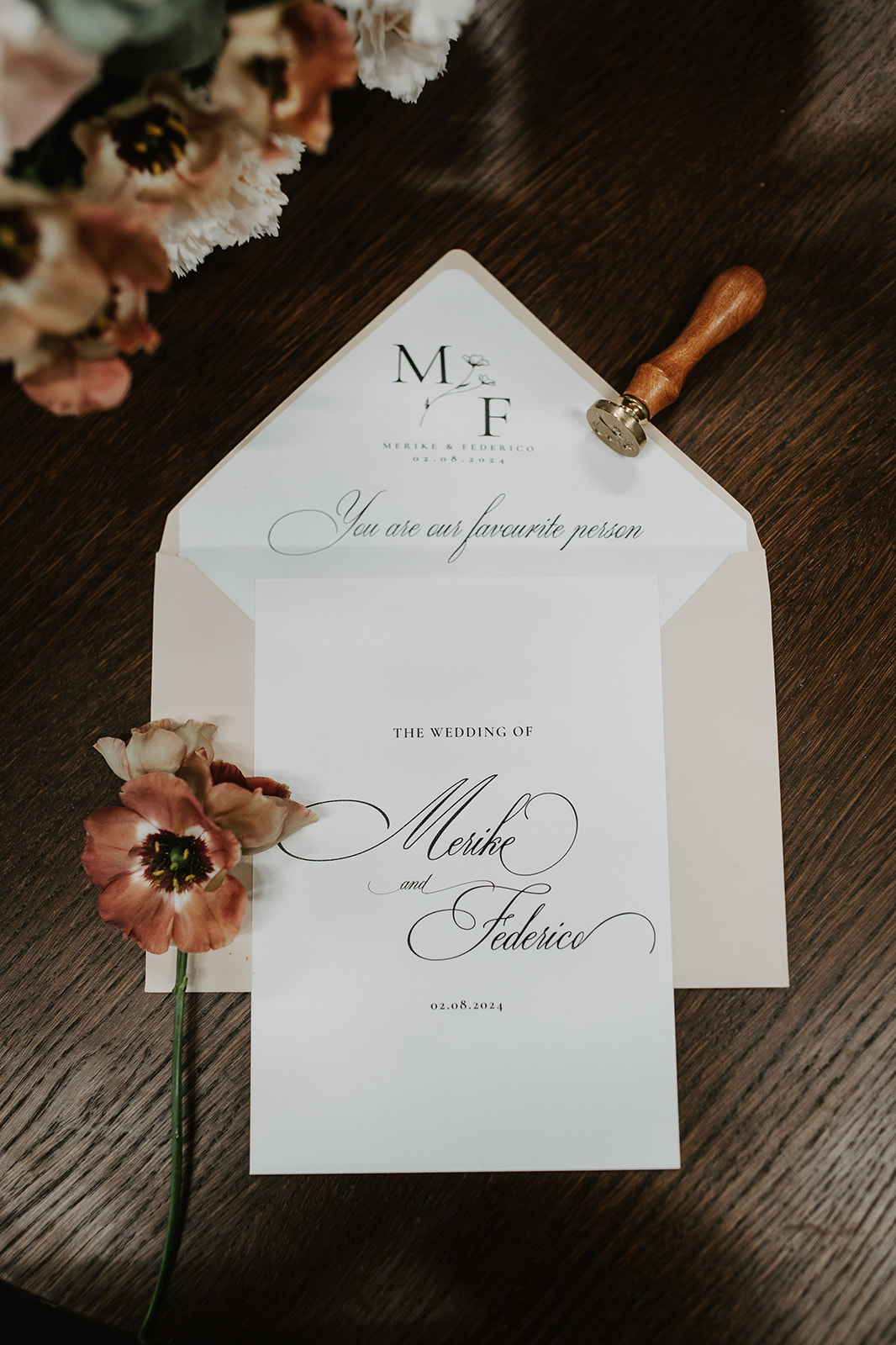
The design of the invitations is an important part of the overall look of the celebration, but what’s written on them is even more important. While every wedding is different, here are a few tips on what to include in your wedding invitations.
Who?
First, you should decide whether you want to send personalized invitations to your guests or if the invitations will be non-personalized. Both options have their pros and cons; just choose the one that works best for you.
Personalized invitations certainly add a personal touch, and an invitation addressed by name makes the recipient feel special. Personalized invitations also help avoid confusion about who is actually expected to attend the party. There are cases where recipients of non-personalized invitations bring along grandmothers and aunts who weren’t actually on the guest list.
Non-personalized invitations save a lot of trouble when it comes to organizing and distributing them, since you don’t have to worry about them getting mixed up. Also, invitations without names are more affordable, since the designer doesn’t have to spend time personalizing them.
Non-personalized invitations are also an option if you want to have the text of your invitation printed using foil stamping, since this method does not allow for customization on the invitations.
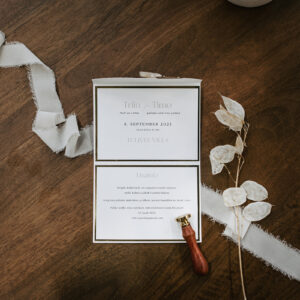
When?
A very important detail that should definitely be included on the invitation is the date and time. You should note not only what time the ceremony begins, but also what time guests should arrive. Be sure to allow enough time so that everyone can arrive calmly and get ready in the right place at the right time.
If there are foreign guests attending the party, the date should be written on the invitation in a way that is clear to everyone.
Be sure to include on the invitation how and by when you’d like to receive your guests’ responses (RSVP) —in other words, to know who’s coming and who isn’t.
Where?
Be sure to include the following on the invitation: the locationwhere guests are expected to go. Indicate the location of the ceremony, and if the reception is taking place later at a different location, include the reception venue as well.
It is recommended that you specify the location as precisely as possible, since there are several places in Estonia with the same or very similar names; therefore, be sure to include, for example, the county. 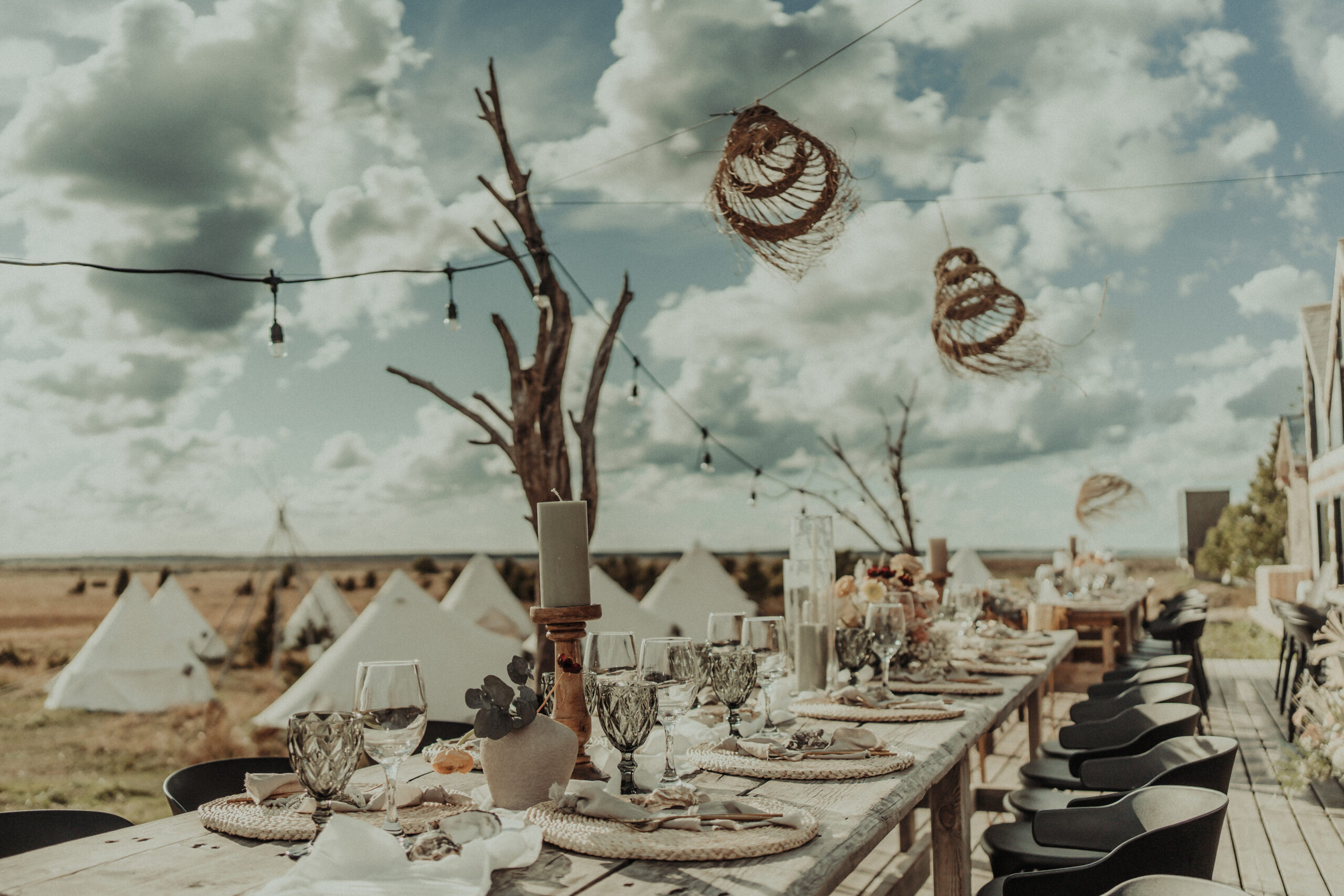
Additional Information
In addition to the above, there is a great deal of other important information that guests may need to know even before the wedding. For example:
- Is lodging needed? If so, does the bride and groom arrange it, or does everyone have to make their own arrangements?
- Are there organized buses to the party venue?
- Are children welcome at the party?
- Does the bride and groom want flowers, and if so, what kind?
- What would the bride and groom like as a gift?
- What is the dress code?
- If the menu is à la carte, do I have to choose my dishes in advance? How do I let them know about any special requests?
- Who should I contact if I have various questions?
- Is there a wedding planner?
As you can see, there is a lot of information, and to ensure that the invitation isn’t overloaded and nothing gets lost, the layout must be carefully thought out. Often, an additional sheet is used for supplementary information to keep the invitation’s design clean and aesthetically pleasing.
Another great option is to create a website for your wedding and include the URL on your invitations. A website offers significantly more space for information, and you can add and update details as needed. It’s also very easy to handle RSVPs and menu-related questions through the website. If you’d like a personalized website for your wedding, we can help you with that!
We hope you've gotten some great ideas for your wedding invitations! If you need help, write to ushere, and we'll be happy to assist you!